What each method actually is
Calorie counting means tracking total calories per day against a target. You don't care whether those calories came from chicken, rice, or chocolate — only the daily total.
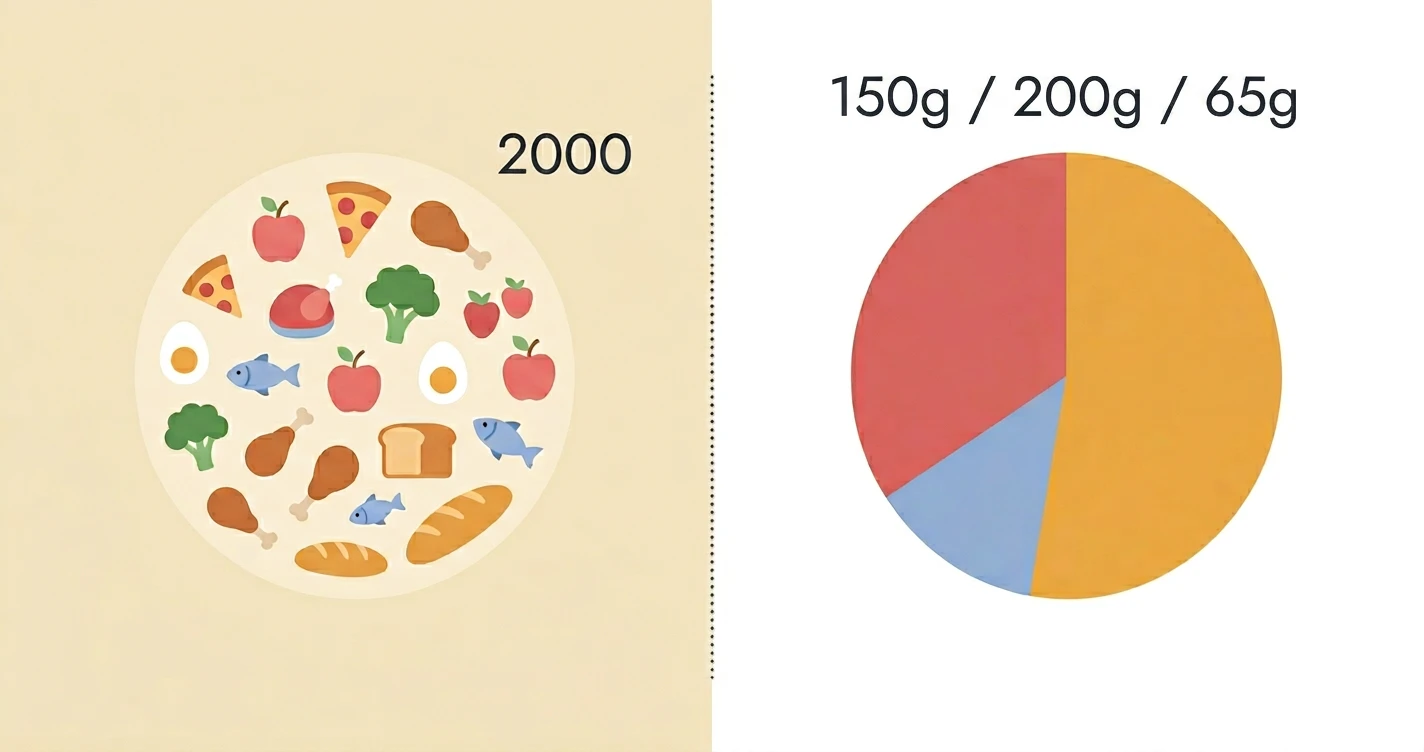
Macro counting means tracking calories AND the breakdown of those calories into protein, carbohydrates and fat. A typical macro split for fat loss might be 40% protein, 30% carbs, 30% fat. You hit a daily target for each.
Both approaches respect the same underlying truth: energy balance determines weight change. The difference is what each one optimises for beyond just weight.
Head-to-head comparison
| Factor | Calorie counting | Macro counting |
|---|---|---|
| Difficulty | Easy | Moderate |
| Time per day | 3–5 min | 8–12 min |
| Weight loss | Just as effective | Just as effective |
| Muscle preservation | Weak | Strong |
| Body composition | Good | Better |
| Athletic performance | Poor signal | Strong signal |
| Hunger management | Variable | Better (protein/fibre tracked) |
| Restaurant-friendly | Yes | Harder |
| Adherence at 12 weeks | Higher | Lower |
| Best for | Weight loss, beginners | Body recomp, athletes |
The key insight from the literature: for total weight change, the two methods are equivalent. A 2018 randomised trial in JAMA followed 600 people for a year on either low-fat or low-carb diets — both groups lost the same amount of weight on average. What you eat matters less than how much, when the goal is just weight reduction.
For composition — losing fat while keeping muscle — macros matter. The same body weight can mean very different physiques depending on protein intake.
When calorie counting alone is better
You're new to tracking
Adding macro targets on top of calorie targets multiplies decision-making. New trackers who try to hit four numbers simultaneously (calories + 3 macros) often give up within two weeks. Calorie counting alone has a far higher success rate at 12 weeks according to a 2019 adherence study in the International Journal of Obesity.
Your goal is weight loss only
If you have 15+ kg to lose and your only concern is the scale moving down, calorie counting is enough. Muscle preservation matters less when you're carrying significant excess weight — your protein intake will naturally be reasonable just by hitting your calorie target with normal food choices.
You eat out frequently
Estimating calories at restaurants is feasible. Estimating exact protein, carb and fat breakdowns is almost impossible. Calorie counting is far more compatible with a normal social life.
You've never tracked before
Start with the simpler version. Once calorie counting feels automatic — usually around week 4 — you can add protein tracking as a "lite" macro target without rebuilding your habits.
When macro counting earns its complexity
You're trying to build muscle
Muscle gain requires sufficient protein, sufficient carbs to fuel training, and sufficient (but not excessive) fat for hormones. Hitting these without tracking is guesswork. Macro counting is the most efficient path.
You've plateaued on calories alone
You've been losing weight on calorie counting, and now progress has stalled. Often the cause is dropping protein as overall calories drop — leading to muscle loss, lower NEAT, and a plummeting metabolism. Adding macro targets — especially protein — typically restarts progress without further calorie cuts.
You're recomping (lose fat, gain muscle)
Body recomposition requires eating near maintenance calories with very high protein. This is impossible to do reliably without tracking macros — the daily fluctuations in protein intake are too significant.
You're an endurance athlete
Carb intake before and around training matters for performance. Macros let you periodise — higher carbs on training days, lower on rest days — which calorie counting can't.
The pragmatic hybrid approach (what most people should actually do)
The best results come from a graduated approach:
- Weeks 1–4: Calories only. Build the habit of logging every meal. Hit your calorie target consistently.
- Weeks 5–12: Calories + protein. Add a single protein target. Most people need 1.6–2.2 g per kg of bodyweight. Carbs and fat are whatever's left.
- Week 12+: Full macros (optional). If body composition is the goal, add carb and fat targets. If you're happy with the rate of change, stay with calories + protein.
This sequence reflects how much each variable matters. Calories control weight. Protein controls muscle. Carbs and fat ratios matter most for performance and individual preference — important, but third-tier in priority.
Track your meals without the maths
FreeCalorieTracker scans your food from a photo, looks up barcodes, and shows your daily progress against your personal calorie target. Free forever.
Start tracking free →How to track either method efficiently
The biggest factor in success is making logging painless. Manual logging — entering each ingredient, weighing every portion — has a 30-day abandonment rate over 70% according to a 2021 review of fitness app usage. Automation matters.
What an effective tracking workflow looks like:
- Take a photo of meals you eat at home or in restaurants — AI estimates calories and macros instantly
- Scan a barcode for any packaged food — automatic match to nutrition labels
- Save favourites for repeat meals (your usual coffee, lunch salad, etc.)
- See daily totals at a glance against your calorie and protein targets
If you've tried calorie counting before and given up because the manual logging was too tedious, the modern AI-powered tools — see our breakdown of photo-based calorie counting — change the equation. The whole loop takes 15 seconds per meal instead of 5 minutes.