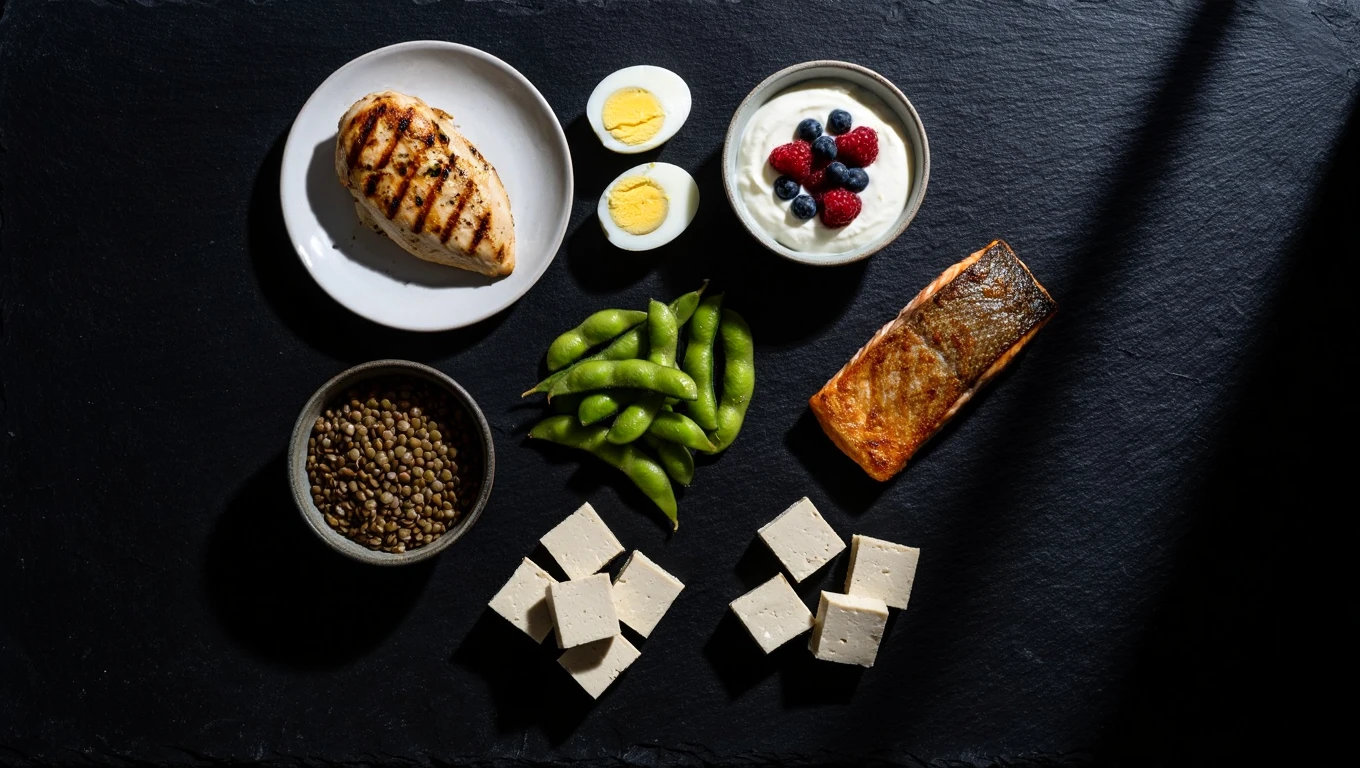
Why protein matters more than any other macro
If you only fix one thing about your diet, fix protein. The reason: protein does three things that carbs and fat cannot.
It preserves muscle in a calorie deficit. A 2017 meta-analysis in the British Journal of Sports Medicine found that high-protein intake during weight loss preserved approximately 1.5 kg more lean muscle than standard-protein intake — the difference between looking lean and looking skinny-fat after a cut.
It's the most filling macronutrient. Protein triggers satiety hormones (PYY, GLP-1) more effectively than carbs or fat. A 2005 study in the American Journal of Clinical Nutrition demonstrated that simply raising protein from 15% to 30% of calories caused subjects to spontaneously eat 441 fewer calories per day — without any other dietary change.
It costs you calories to digest. The thermic effect of food is roughly 20–30% for protein, compared to 5–10% for carbs and 0–3% for fat. Eat 100 calories of chicken and you net about 75 of them; eat 100 calories of olive oil and you net 98.
The target for most adults is 1.6–2.2 g per kg of bodyweight in a fat loss phase, settling around 1.4–1.8 g/kg at maintenance. See the full protein per day guide for the science. Below, the foods that get you there.
Top 15 animal protein sources
Ranked by protein per 100g of edible portion. Calorie figures based on USDA FoodData Central, 2024 update.
| # | Food | Protein (g) | Calories | Protein density |
|---|---|---|---|---|
| 1 | Chicken breast (cooked) | 31g | 165 kcal | ★★★★★ |
| 2 | Turkey breast (cooked) | 30g | 135 kcal | ★★★★★ |
| 3 | Tuna (canned in water) | 30g | 132 kcal | ★★★★★ |
| 4 | Beef sirloin (lean, cooked) | 29g | 183 kcal | ★★★★ |
| 5 | Shrimp/prawns (cooked) | 24g | 99 kcal | ★★★★★ |
| 6 | Cod (cooked) | 23g | 105 kcal | ★★★★★ |
| 7 | Pork tenderloin (lean) | 22g | 143 kcal | ★★★★ |
| 8 | Salmon (Atlantic, cooked) | 22g | 208 kcal | ★★★ |
| 9 | Tinned sardines (in water) | 21g | 124 kcal | ★★★★ |
| 10 | Egg whites (boiled) | 11g | 52 kcal | ★★★★★ |
| 11 | Cottage cheese (low-fat) | 11g | 72 kcal | ★★★★ |
| 12 | Greek yoghurt (0% fat) | 10g | 59 kcal | ★★★★★ |
| 13 | Whole eggs (boiled) | 13g per 2 eggs | 155 kcal | ★★★ |
| 14 | Whey protein powder (1 scoop) | 24g | 120 kcal | ★★★★★ |
| 15 | Lean deli ham | 21g | 110 kcal | ★★★★ |
Top 15 plant protein sources
Plant proteins are perfectly adequate for muscle maintenance and growth — a 2021 study in Sports Medicine found no muscle-building difference between vegan and omnivore diets when total protein was matched. The main challenge is volume: you need more food to hit the same number.
| # | Food | Protein (g) | Calories | Notes |
|---|---|---|---|---|
| 1 | Seitan | 25g/100g | 120 kcal | Highest plant density |
| 2 | Tempeh | 19g/100g | 193 kcal | Fermented, gut-friendly |
| 3 | Edamame (cooked) | 18g/cup | 189 kcal | Complete protein |
| 4 | Lentils (cooked) | 18g/cup | 230 kcal | High fibre too |
| 5 | Black beans (cooked) | 15g/cup | 227 kcal | Cheap, versatile |
| 6 | Tofu (firm) | 14g/100g | 144 kcal | Pan-fry for texture |
| 7 | Chickpeas (cooked) | 15g/cup | 269 kcal | Roast for crunch |
| 8 | Pea protein powder | 24g/scoop | 120 kcal | Best vegan powder |
| 9 | Hemp seeds | 10g/3 tbsp | 166 kcal | Complete protein |
| 10 | Quinoa (cooked) | 8g/cup | 222 kcal | Complete protein, rare in plants |
| 11 | Soy milk (unsweetened) | 8g/cup | 80 kcal | Closest dairy substitute |
| 12 | Peanut butter | 8g/2 tbsp | 188 kcal | Calorie-dense |
| 13 | Almonds | 6g/30g | 164 kcal | Snack option |
| 14 | Buckwheat (cooked) | 6g/cup | 155 kcal | Naturally gluten-free |
| 15 | Nutritional yeast | 5g/2 tbsp | 40 kcal | Cheesy flavour, vitamin B12 |
How to hit 30g of protein at each meal
The simplest approach to hitting a daily protein target: aim for 30g per meal across 3–4 meals. Here's what 30g looks like in practice.
Breakfast (30g of protein)
- 200g Greek yoghurt + 1 scoop whey + handful of berries — 32g
- 3 whole eggs + 100g cottage cheese on toast — 31g
- Tofu scramble (200g firm tofu) with spinach — 28g (round up with chickpeas)
Lunch (30g of protein)
- 120g grilled chicken breast in a salad/wrap — 37g
- 2 cans of tuna (drained) on greens — 50g
- 1 cup lentils + 1 cup quinoa bowl — 26g (add hemp seeds for 36g)
Dinner (30g of protein)
- 150g salmon + roasted vegetables — 33g
- 200g lean beef stir-fry — 58g (counts as two servings)
- 250g tofu + edamame + rice — 35g
Track your meals without the maths
FreeCalorieTracker scans your food from a photo, looks up barcodes, and shows your daily progress against your personal calorie target. Free forever.
Start tracking free →Cheapest protein per gram
Protein doesn't have to be expensive. Sorted by cost per 30g of protein (UK/US average supermarket pricing, 2026):
| Food | Cost per 30g protein |
|---|---|
| Dried lentils | ~$0.25 |
| Eggs | ~$0.65 |
| Whey protein (bulk) | ~$0.70 |
| Tinned tuna | ~$0.85 |
| Chicken breast (in bulk) | ~$1.20 |
| Greek yoghurt (large tub) | ~$1.30 |
| Tofu | ~$1.50 |
| Salmon fillet | ~$3.50 |
| Beef sirloin | ~$4.00 |
If budget is tight, building meals around eggs, lentils, tuna and bulk-bought chicken makes hitting a 150g daily protein target genuinely affordable.
How to track this without a calculator
The easiest way to know whether you actually hit 30g per meal is to log it. FreeCalorieTracker shows protein, carbs, fat and fibre for every meal you log — and a running daily total against your personal target. Take a photo of your plate, or scan a barcode, and the breakdown appears in seconds.